

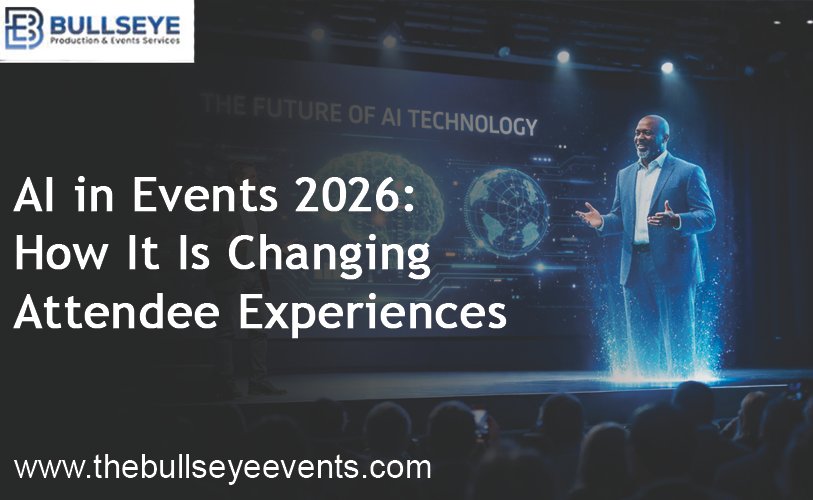
Artificial intelligence is becoming more and more visible across conferences, exhibitions, corporate gatherings, entertainment programs and other live experiences. In Dubai, where the events industry works with an international audience, event production is increasingly using AI tools to improve planning, personalization, communication and on-site experiences. From registration systems to real-time audience insights and personalized content, AI is changing how people interact with events before, during and after they happen. In 2026, these technologies are moving beyond testing. Becoming useful tools for event organizers.
What Is AI in Event Production?
AI in events refers to the use of artificial intelligence technologies to help with planning, communication, content, audience engagement, logistics and other parts of an event. AI can look at a lot of information quickly. Find patterns that can be hard to see manually. Event teams can use these abilities to understand what attendees like, tasks that happen again and again and offer more relevant experiences.
Examples include:
powered registration
Personalized event recommendations
Automated chat assistants
Smart scheduling
Audience data analysis
AI-generated content
Real-time translation
Facial recognition where it is allowed by law and managed properly
Predictive analytics
Automated post-event analysis
The technology does not always replace event professionals. Instead, it can give teams tools to handle complex events and respond to what attendees need.
Personalized Attendee Experiences
One of the changes from AI is personalization.
Traditional events often offer the schedule, information and suggestions to everyone. AI can help organizers create unique experiences based on what attendees choose to share.
For example, an event platform could suggest sessions based on a person’s chosen interests. Someone going to a technology conference might get suggestions for AI, cybersecurity and cloud-computing sessions, while another person interested in marketing might get suggestions.
This can help people find the parts of a big event without going through every session by hand.
Smarter Event Registration
Registration is one of the things an attendee does when they join an event.
AI-powered registration systems can handle parts of this process automatically. Chatbots can answer questions and smart forms can help direct attendees to the right information.
For events in Dubai, where people come from different countries and time zones, automated messages can also provide details about schedules, venue locations, transportation and event rules.
A better registration experience can reduce the questions for event staff and give attendees faster access to important information.
AI Chatbots and Virtual Assistants
Event chatbots are getting more and more advanced.
Instead of looking through an event website or app, attendees can ask questions using normal language.
For example:
“Where is the main conference hall?”
“What sessions are happening at 3 PM?”
“Where can I get my badge?”
“Which networking session’s good for marketing professionals?”
An AI assistant can give answers based on what is in the event system.
For events, the ability to speak different languages can also help attendees talk and get information in different languages.
Read More: Dubai Video Production Cost 2026: Rates by Type & Producer
Real-Time Translation
Dubai has events with people, speakers, exhibitors and professionals from different countries. Language differences can sometimes make it hard for people to understand each other during conferences.
AI-powered translation and transcription tools can help break down some of these barriers.
Depending on the technology being used, attendees may be able to see translated captions, transcripts or other language help during presentations.
This can make sessions easier to understand for people from other countries and let organizers talk to a bigger group of participants.
However, automated translation can still have mistakes with technical words, accents, names and context. Important content may need to be checked by a person.
More Relevant Networking Opportunities
Networking is a reason people go to conferences and business events.
Finding the people to talk to can be hard when there are hundreds or even thousands of people at an event.
AI can look at information like interests, industries, session choices and networking goals to suggest possible connections.
For example, an event app could find that an attendee likes event technology and suggest people who have similar interests.
The technology does not always make a connection. It just helps make large networking areas easier to get
AI-Driven Content Recommendations
Big conferences can have sessions.
Attendees may have a time deciding which presentations, workshops, panels or demos are best for them.
AI recommendation systems can use what attendees like to suggest sessions.
Suggestions can also change during the event. If someone keeps going to sessions about a topic, the system might suggest more related content later in the schedule.
This can make the event feel more relevant without people needing to look through the program themselves.
Improving Audience Engagement
AI can also help event organizers see how audiences are reacting to content.
Depending on the platform and what people agree to, organizers can look at information like
Session attendance
App use
Poll answers
Questions asked
Content downloaded
Networking activity
Session ratings
These insights can help organizers see which parts of an event people like.
For example, if one workshop always has a lot of people while another has organizers can find out why and use that when planning future events.
AI and Event Content Creation
AI tools are being used more and more to help with creating content.
Event teams might use AI to help with:
Drafts of social media posts
Session descriptions
Email options
Event summaries
Speaker introductions
Attendee messages
Post-event reports
Human checks are still important for content that people see publicly.
AI-generated content can have facts, bad words or information that does not match the way an organization talks. Event teams should see AI as a helper, not a way to just publish everything it makes.
Better On-Site Navigation
Large places can be confusing for people who are there for the first time.
AI-powered event apps can help attendees find:
Conference rooms
Exhibition booths
Registration areas
Food and drink areas
Restrooms
Networking areas
Emergency information points
When connected to maps and event data, digital helpers can give directions through a person’s phone.
This can be really helpful for exhibitions and large events with many rooms.
AI for Exhibitions and Trade Shows
AI is also changing the way people experience exhibitions.
Exhibitors can use AI systems to help visitors find the products, services, demos or booths.
For example, someone who likes event technology could get suggestions for exhibitors with solutions.
Exhibition organizers can also look at data to see which areas have the visitors.
Again, privacy and permission matter. Organizers should explain clearly how they collect and use data.
Predictive Analytics for Event Planning
AI can help organizers look at past and current data when planning events.
Possible uses include looking at:
Registration trends
Attendance numbers
Session popularity
Times when people arrive the
Food needs
Where people go in the venue
Ticket sales
Marketing interest
These insights can help event teams make better decisions.
For example, past attendance trends could help organizers guess how many people might come to a session or when registration desks might get busy.
Predictions are not certain, though. Things like weather, transport problems, other events or changes in what people want can still change the results.
AI and Event Safety
Technology can also help with some safety and operation tasks.
Depending on the event and the rules, AI tools might help watch how crowds move, find patterns or send alerts to event teams.
For public events, these tools can give organizers more information about how many people are there and where they are going.
Safety-related AI must be used carefully. People are still important because automated systems can have alerts or get things wrong.
Any technology that uses cameras, body information or personal data must follow the rules about privacy. How data is kept.
How AI Is Changing Virtual and Hybrid Events
AI is not for in-person events.
Hybrid events mix people coming in person with those joining online, which creates problems for organizers.
AI can help people with things like automatic captions, translations, content suggestions, chat help and searchable transcripts.
For example, someone online who misses part of a talk could use a transcript or event search to find the part they missed later.
This makes online participation easier. Helps people who are not there in person get the same content as those who are.
What Attendees Should Expect in 2026
As AI becomes more common in events, people who go to events may see changes.
Event websites are likely to be more personal, while automated helpers may take care of simple questions. Suggestions may be better. Talking in different languages may be easier.
At the time, people may have more questions about privacy and how their data is used.
Event organizers should be open about how they collect, store and use information. Giving choices about data and personalization can help build trust.
Will AI Replace Human Event Professionals?
AI can do some tasks automatically. Live events need creativity, relationships, talking things through, solving problems, making choices about how things are made and people working together.
An event professional might use AI to look at data or send messages. Still make the important choices.
For example, AI might find a scheduling problem, but an experienced event manager still has to decide how to fix it while thinking about speakers, people coming, sponsors, the place and the overall event.
So the best way for AI to work is as a tool that helps people, not as a way to replace them completely.
Challenges of Using AI at Events
Even though AI has a lot of points, it also brings some problems.
Privacy
Events can collect a lot of information. Organizers need plans and ways to protect data when they use this information.
AI systems can make mistakes. Automated answers, translations, recommendations and generated content should be checked where accuracy matters.
Technical Reliability
Technology can fail because of connectivity problems, software issues, device limitations, or unexpected system behavior. Event teams should maintain processes for important services.
Human Interaction
much automation can make an event feel impersonal. Attendees may still want to speak with people when dealing with complex questions or special situations.
Cost
Advanced AI systems can require software subscriptions, integrations, technical support and trained staff. Organizers need to consider whether a particular technology provides value for their event.
The Future of AI in Dubai’s Events Industry
Dubai’s international events environment provides opportunities for technology to play a role in conferences, exhibitions, corporate events, entertainment programs and large-scale experiences.
AI can help event teams manage complex attendee expectations while improving personalization and access to information.
The technology is likely to continue developing. Successful implementation will depend on more than adopting the latest AI tool. Organizers need to consider the event’s objectives, audience, venue, budget, privacy responsibilities and operational requirements.
The useful AI applications will likely be those that solve genuine attendee or organizational problems rather than technology added simply because it is new.
Final Thoughts
AI is changing attendee experiences by making event interactions more personalized, accessible and data-informed. From registration and networking to translation, content recommendations, navigation and post-event analysis AI can support stages of the event journey.
For Dubai’s diverse events market, these capabilities can be particularly relevant when organizers are serving audiences and managing large-scale experiences.
However, successful AI implementation requires balance. Technology should support the side of events rather than remove it. When event professionals combine AI tools with planning, creativity, personal interaction and responsible data practices, attendees can benefit from a more convenient and relevant experience.
FAQs
How’s AI changing events in 2026?
AI is being used for registration, personalization, networking, translation, attendee communication, content recommendations, analytics and other event processes.
How can AI improve the attendee experience?
AI can provide session recommendations, faster answers to common questions, multilingual support, navigation assistance and more relevant networking suggestions.
Can AI help with event registration?
Yes. AI-powered systems can automate parts of registration answer questions, provide event information and help attendees find relevant resources.
Can AI translate event presentations?
AI-based translation and transcription technologies can provide translated captions or transcripts depending on the system being used. Accuracy can vary; important content may require human review.
Is AI for exhibitions in Dubai?
AI can support exhibitions by helping attendees discover exhibitors, products, sessions and services while giving organizers additional insights into event engagement.
Will AI replace event planners?
AI can automate tasks, but event planning still requires human decision-making, creativity, communication, coordination and problem-solving.
How can AI improve networking at events?
AI can analyze voluntarily provided attendee information and interests to suggest relevant people, sessions or networking opportunities.
What are the risks of using AI at events?
Important considerations include privacy, data security, inaccurate outputs, technical failures, cost and maintaining human interaction.
Is AI for every event?
Not necessarily. The value of AI depends on the event’s audience, objectives, scale, budget and operational needs. Organizers should select technology based on requirements rather than using AI simply for its novelty.
